Process

ESG integration and stewardship activities are central to the long-term success of any mining company and have therefore been a key component of Konwave’s investment process since 2012.


ESG Integration

We believe that long-term, sustainable returns depend on stable, well-functioning and well-governed social, economic and environmental systems.

ESG criteria have been embedded in the investment decision-making process since 2012 and have always formed an integral part of the fundamental assessment of mining companies.

ESG criteria have been embedded in the investment decision-making process since 2012 and have always formed an integral part of the fundamental assessment of mining companies.

Key sustainability factors

As active investors we draw on fundamental analysis, supported by independent ESG data and research as well as our own engagement with mining companies, to identify, assess and prioritise key sustainability factors.
We do so to identify and manage risks linked to sustainability factors such as the environment, social issues or governance. This enables us to engage with management to sharpen the focus on ESG factors or to avoid investing in ESG laggards. Mining companies that neglect ESG factors will, in

the medium to long term, encounter economic challenges that can materially impair the value of the investment. It also allows us to understand the opportunities or potential competitive advantages associated with managing these factors, supporting the transition to a low-carbon economy or contributing to the UN Sustainable Development Goals.

Environment

Environmental factors include those relating to the use and availability of natural resources, including water consumption or the water stress it creates, CO2 emissions, pollutant emissions, energy efficiency, pollution and waste.

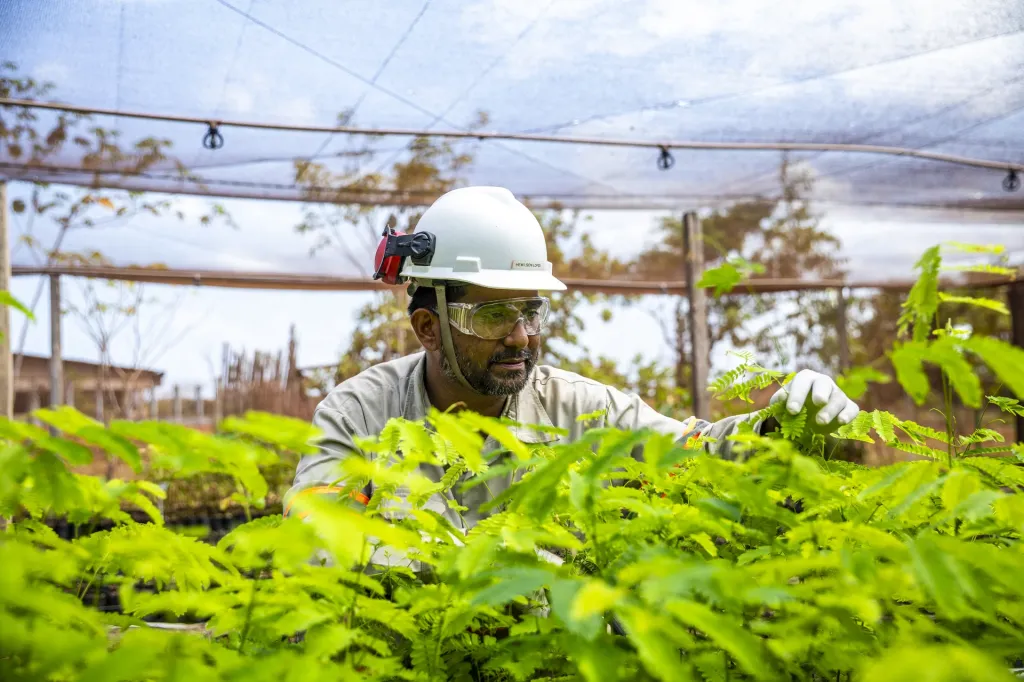
Biodiversity risks may arise from reliance on natural ecosystems threatened by deforestation, soil degradation and unsustainable activities, among others, or from adverse events causing serious harm to biodiversity.

Climate change

We support the goal of the 2015 Paris Agreement to limit global warming to 1.5 degrees Celsius and strive to integrate relevant physical and transition-related climate risks and opportunities into our investment decisions.

We look to ensure that companies maintain appropriate governance, strategy, risk management and disclosure around CO2 emissions and impacts across their value chain.

Social

Social factors include those related to diversity and inclusion, health and safety, human rights and labour standards in direct operations, the supply chain and the products and services offered. Social risks may arise from poor workforce management, health and safety shutdowns or reputational risks linked to poor labour practices. Beyond safeguarding fundamental human rights, we expect companies to have suitable strategies, procedures and disclosures to address these risks.

Stewardship activities

Stewardship and the principles of sound corporate governance are central to our approach to responsible investment.

As investors we recognise our responsibility and use our influence to encourage companies to focus on long-term sustainable value creation and to deliver positive outcomes for our clients, society and the environment.

Voting

Voting is an essential part of active asset management. We seek to vote all shares for which we hold voting rights and in principle follow the recommendations of ISS (Institutional Shareholder Services).

Engagement

In very rare cases where ISS recommendations diverge from our ESG guidelines (particularly governance) or from the interests of our investors, we may vote differently.

UN PRI


Engagement is a vital and integral part of our investment strategy. Our engagement aims to identify and reduce ESG-related risks and controversies through constructive dialogue with the company concerned. We live active ownership: as a rule we meet our portfolio companies once or twice a year. These meetings address ESG and CO2 factors and any scope for improvement. Konwave urges companies to continuously enhance their ESG practices in order to create long-term value for stakeholders and to accept responsibility for the planet. In this context, companies are expected to develop a coherent sustainability strategy aligned with their overall corporate strategy. We monitor companies closely. In follow-up meetings with management we review whether agreed targets have been met, discuss progress achieved and verify that the sustainability strategy remains on track.